Bonus part due to high interest
Part 07Answers to 1,000+ Comments, the Math of Used EVs, and What Really Gets ICE Fans’ Blood Boiling?
Answers to readers’ discussions, a transparent breakdown of used VW ID.4 costs, and a numbers-based comparison of EVs and ICE cars.
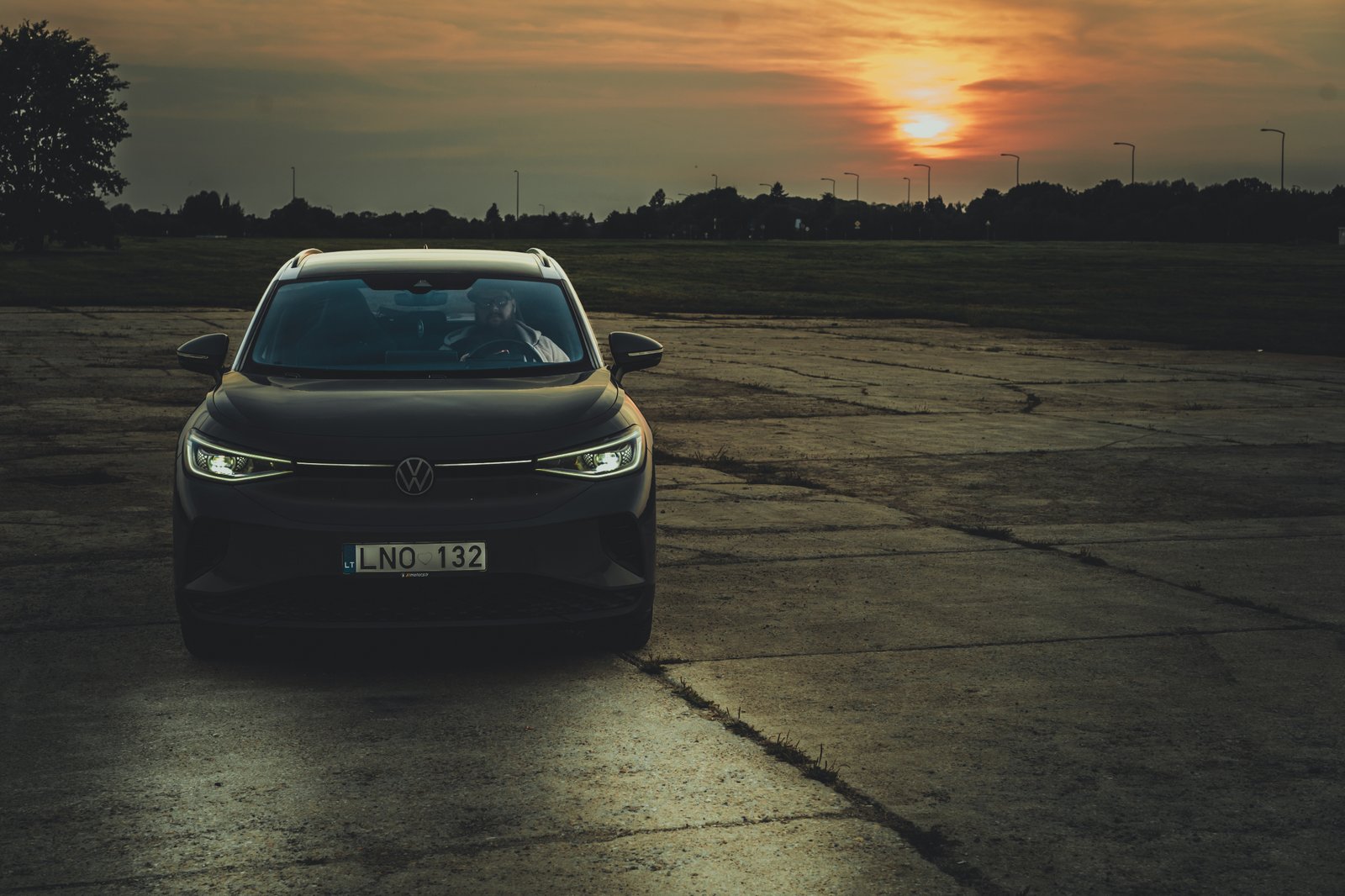
Hello, friends, readers and everyone following the "EV Openly" project! 👋
I'll be honest – I thought the 6th part would be the final chord of the project. However, after its publication, I had to sit down at the computer, brew more than one cup of tea and write this unplanned 7th part. The sixth part caused a real phenomenon: reach crossed the 256,000 mark, I received thousands of reactions and more than 1,000 comments in 8 Facebook groups! 🔥 Reading the comments, I had to see everything – from sincere support and very constructive arguments to mockery, sarcasm or even comments about my appearance. And that is completely normal – to each their own! 😉 Analyzing this storm of discussions, I noticed two interesting things: 1. A large part of the angry critics didn't even open the blog (www.evatvirai.lt). A large part of the "provocative" questions asked had already been answered in detail in parts 1–6. The doubts raised came simply from a desire to criticize without digging in. 🤷♂️ 2. The biggest passions boiled in internal-combustion-engine communities, where ICE supporters came to fiercely defend internal combustion engines. Due to the specifics of Facebook algorithms, the article reached a wide audience, and this provoked a strong defensive reaction. For the sake of peace and for those who missed the first parts, I once again present the full and transparent passport of my car:
🚘 Used VW ID.4 "passport" and transparent math
Skeptics like to repeat: "An EV will never pay off, because a new one costs €50,000 and loses half its value in a few years." Stop. Let's look at the facts: • Purchase age: The car was bought USED (2021 model, bought in 2025). • Origin: Brought from a VW dealership in Germany. The manufacturer's warranty had already expired, only the battery warranty is valid (until 2029-12-15 or 160,000 km). • Mileage at purchase: 67,222 km. • Battery health (SoH): 93.5% (official certificate at purchase). • Acquisition price: €26,750 (bought on lease). • Equipment: ID.4 PRO Max (77 kWh usable capacity, R20 wheels, heat pump, AR Head-Up display, panoramic roof, massage seats). Personal experience and conclusion: The main and most painful depreciation hit was already "eaten" by the first owner. I simply didn't have it. A 2–4 year-old used electric car currently offers the best price-to-quality ratio on the market. Moreover, 93.5% battery health after 4 years of operation completely refutes the popular myth that "after a few years the battery will have to be thrown away".
📉 Depreciation, TCO and "hidden costs"
Let's answer the two most frequently repeated complaints in the comments: 1. "An EV depreciates faster than an ICE car" Since passions boiled in the comments about "cosmic EV depreciation", I did a really big job – I browsed car manufacturers' pages, Autogidas.lt and Autoplius.lt in order to collect the most accurate information possible and present figures on the NEW car acquisition price, depreciation over 4 years, when the mileage does not reach or is equal to 100,000 km. To ensure objectivity, for comparison I selected very popular SUV models of the same class with higher, equivalent equipment levels (R-Line, Sportline, GT-Line, Executive):
Depreciation comparison of new SUVs over 4 years
| Model and version | New purchase price | Value after 4 yrs (up to 100k km) | Loss over 4 yrs (€) | Residual value (%) |
|---|---|---|---|---|
| VW ID.4 Pro (286 HP) | ~€43,610 (~€38,610 with APVA) | ~€29,000 | ~€14,610 (~€9,610 with APVA) | ~66.5% (~75% with APVA) |
| Toyota RAV4 Executive (Full Hybrid) | ~€52,100 | ~€33,400 | ~€18,700 | ~64.1% |
| Škoda Kodiaq Sportline (2.0 TDI / 1.5 TSI) | ~€46,290 – 49,810 | ~€32,400 | ~€13,890 – 17,410 | ~65–70% |
| VW Tiguan R-Line (2.0 TDI / 1.5 TSI) | ~€43,550 – 47,830 | ~€27,500 | ~€16,050 – 20,330 | ~57–63% |
| Kia Sportage GT-Line (1.6 T-GDI Petrol) | ~€36,981 | ~€26,000 | ~€10,981 | ~70.3% |
What these numbers reveal
These figures reveal three essential facts: • Effect of the initial purchase price and APVA subsidy: As we can see from the table, when choosing pure petrol, diesel or hybrid SUVs, the initial price of a new ID.4 without subsidy is similar to or even lower than, for example, a Toyota RAV4 Executive or Škoda Kodiaq Sportline. Using the €5,000 APVA support (actual purchase price ~€38,610), the ID.4 loses less money in euros over 4 years (~€9,610) than any of these internal-combustion or hybrid competitors (~€11,000 – 20,300). 💰 • Residual value indicator: Even without counting the APVA support, the residual value of the ID.4 after 4 years and up to 100,000 km reaches ~66.5%, which is a better or equal result compared to Toyota RAV4 (~64.1%) or VW Tiguan (~57–63%). The figures simply do not confirm the myth of "twice as fast EV depreciation". 📈 • Dynamics and power advantage: For the same or even lower actual amount, the ID.4 offers a 286 HP dynamic package, while ICE competitors in this range usually offer 150–193 HP engines. 2. "You didn't include the solar power plant and the station in the costs!" Yes, I do not include the acquisition costs of the solar power plant (€2,900 after APVA compensation) and the VOOL 22 kW smart station (€1,750) in the per-kilometer price. Why? Because the solar power plant and the charging station are a long-term investment in real estate and household infrastructure, not a one-time car add-on. The station and the power plant will serve for decades and will raise the value of the home even after changing 3 cars.
🛠️ Real ID.4 operating cost over ~25,000 km
To be completely precise, I added up all the additional car costs over this year: • CASCO insurance: ~€600 / yr. • Mandatory civil liability insurance: ~€80 / yr. • Winter tires (Pirelli R20): €320 / set. • Mandatory technical service (every 2 years): €341.20. • Front control arm bushing replacement (Lemförder): ~€100. Final result: Having driven ~25,000 km, maintenance and insurance costs amount to €0.0576 / 1 km. Adding summer electricity costs (~€0.0127 / km), the total full per-kilometer cost reaches just ~€0.07 / km! 🎉 Agree – CASCO, civil insurance, tires and chassis maintenance are things you do on any car. However, with an ICE car (especially a diesel), the risk of a turbine, EGR valve, injectors, DPF filter, starter, alternator, exhaust system or regular oil and filter changes always hangs over your head. 🔧 An EV simply does not have these components.
⚖️ Honest balance: Where ICE wins, and where EV has no equal?
So that there are no accusations of "blind propaganda", let's be completely objective. In which situations is an ICE car still superior? • Flying down the highway in winter at 130–140 km/h: An ICE car requires less planning and fewer stops. 🏎️ • On long trips: Refilling the tank takes 3–5 minutes. • Living in an apartment building without a charging spot: If you don't have the option to charge in the yard or at work, an ICE car or a simple hybrid remains the easier choice today. In which areas does an EV have no equal? • Daily fuel costs in euros: In the city, the cost of 100 km is incomparably lower. • Convenience and time saving: With a station at home, you NEVER go to a gas station. The car charges overnight or while you shop, exercise, have dinner or spend time at the theater. • Silence and comfort: The absence of engine noise and vibrations creates a completely different level of driving experience. • Zeros on service bills for engine components: No belts, chains, spark plugs, oils, filters or exhaust system repairs. 🛠️
🏁 Conclusions
A used electric car today is the ideal choice for those seeking a rational balance of price, comfort and operating costs. I'm glad that the heated discussions and debates in the comments attracted so many people. If I managed to spark curiosity in even a few ICE drivers and make them calculate their own numbers – my goal has been achieved! I invite everyone to rely on facts and numbers, not on emotions or old myths. 🤝 Thank you to everyone who has been following and continues to follow the evatvirai.lt project. Your support is a huge engine! 🚀 P.S. Did you think that was it? 😉 In the 8th part, I will present the raw truth and the real 2025/2026 winter statistics: how much a kilometer really costs when charging EXCLUSIVELY at public stations during the coldest time of year, how long charging takes in winter and what real challenges are faced. Stay tuned for news! ❄️⚡️
About the "EV Openly" project
This blog was born not for profit, but out of a desire to lift the veil of secrecy from the real operation of electric cars - without marketing filters and embellishments. All texts and figures here will always be open and free. If this information was valuable to you, saved you time searching for answers or helped you make a decision, you can symbolically contribute to the project and "buy me a kilowatt-hour" by choosing one of the support amounts below. This is absolutely non-binding, but the best motivation for me to continue sharing open statistics. Thank you for reading!
Want to be first to know when a new part goes live? ⚡☕
I update this blog roughly every two weeks. Leave your email and I’ll personally send you a short note as soon as I publish something new. No spam, ever — just real numbers and an honest experience!