Personal "Gas Station" at Home - How Much Does Peace Cost and Why "VOOL"?
Hello everyone, back to the fifth part! If someone asked me what the biggest plus of switching to an electric car is, the answer would be very simple. It's not the dead silence in the cabin and not even the instant acceleration when overtaking on the highway. The greatest, everyday pleasure is to forget about gas stations forever...
Hello everyone, back to the fifth part!
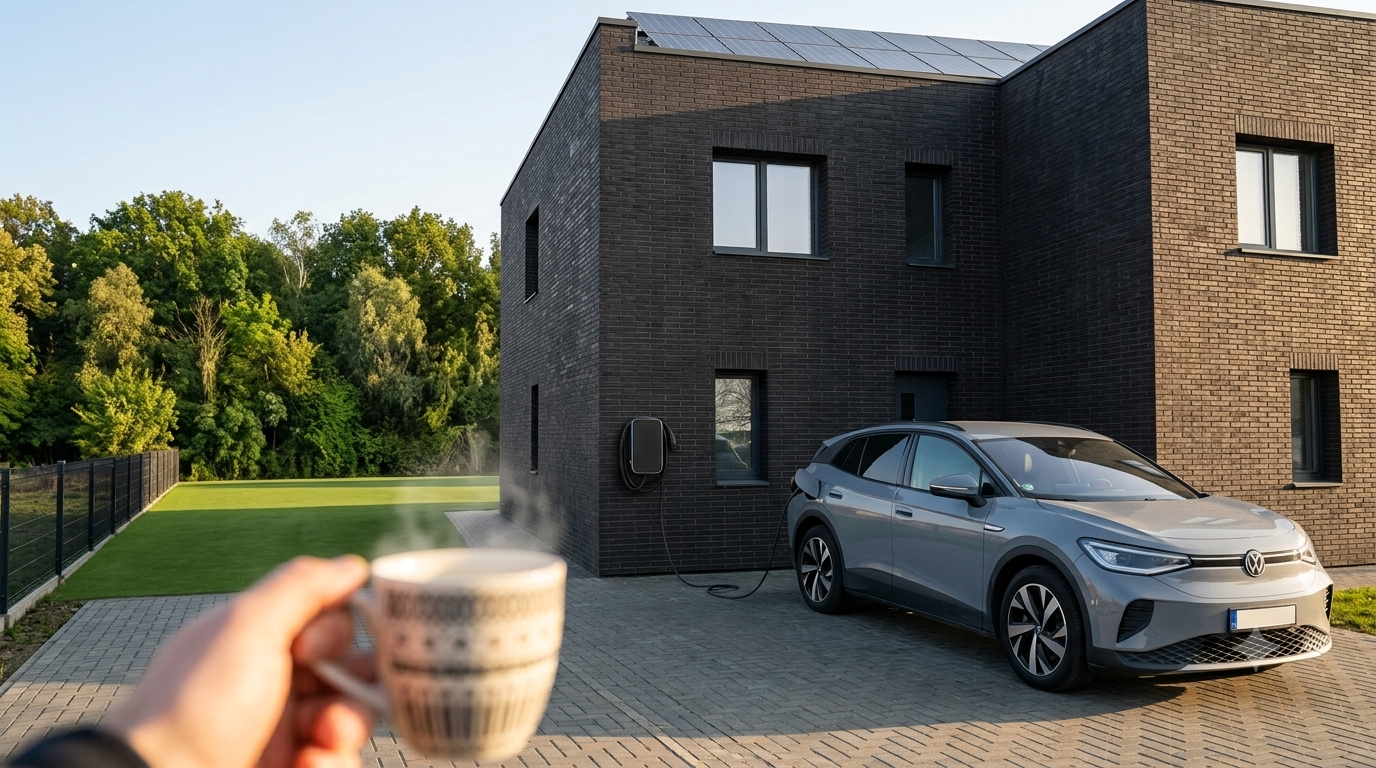
Hello everyone, back to the fifth part! If someone asked me what the biggest plus of switching to an electric car is, the answer would be very simple. It's not the dead silence in the cabin and not even the instant acceleration when overtaking on the highway. The greatest, everyday pleasure is to forget about gas stations forever... 😊 Remember that feeling: early autumn morning, it's raining, you're a little late for work and suddenly the fuel light comes on on the dashboard. You have to turn into a gas station, get cold while pouring fuel, and then stand in line at the cash register while the person in front of you spends ten minutes choosing hot dog sauce and coffee size. With an electric car, all this simply disappears. You wake up, drink coffee, and your car is parked in the yard with a full "tank" of the cheapest night electricity. But... for this idyll to become a reality, you need a personal charging station. And this is where the fun part begins. As soon as you start to get interested and go into the vastness of the Internet, the market looks like a complete jungle. Teltonika, Wallbox, Easee, NexBlue... Some stations cost 400 euros, others - one and a half thousand. Different powers, some smart controllers, phase balancing. It seems that without an engineering education there is nothing to get into here, and your head is simply bursting with information. In this part, I will tell you completely frankly and with numbers what criteria I was guided by, why the station from the Estonian manufacturer "VOOL" ended up on the wall of my house and how much this entire installation process actually cost - without any nerves, without a dug-up yard and... without state support.
⚡ We destroy myths: Do you really need a astronomically big power outlet?
First of all, I want to dispel the complete myth that in order to have a charging station at home, you need at least a 20 kW electrical input. Absolutely not. My house has an 11 kW input (I increased it by installing a solar power plant on the roof). At first, I myself experienced that it would not be enough, there would be "traffic jams", there would be inconveniences, or in the end the car would charge for 10 hours. Everything changed when, after a very good recommendation, I called the "ĮKRAUTAS.LT" team to talk. A sincere discussion and assurances that I really did not need to increase the input power bribed me. Since I was installing the station at my own expense, I initially asked for a more economical option - a station from the manufacturer "MOREK". The company representatives did not object and agreed that this would be a rational solution in order to pay less, but at the same time maintain high quality. Everything is agreed, the contract is signed, photos of the house panel and the desired location of the station have been sent - I'm waiting for the installers to arrive.
🔨 What to do when you don't want to drill new walls in your house?
Before installing the station, the craftsmen always inspect and evaluate the possibilities live. To my great surprise, very nice, qualified and sincere advice-giving guys arrived. And this is where the fun began. One essential technical nuance turned out: the LMC module of the cheaper MOREK station (this is a meter that is placed in the house panel and monitors how much electricity the house uses so as not to exceed the capacity) does not have a wireless connection with the charging station itself outside. What does this mean in practice? Well, it means that you will need to run a physical internet cable from the panel to the station - through the walls of the corridor, through the closet, drill everything through and install plastic pipes. In my new house, this was absolutely undesirable... I was already panicking. The craftsmen, seeing my face, began to suggest options for routing everything outside, but immediately warned that such an installation would cost a lot. I thought that was all - I would have to put up with the terrible view in the corridor area. But then the craftsmen asked: "And wouldn't you like to consider a slightly more expensive VOOL option?" I was stunned. It turns out that the LMC modules of the smart "VOOL" stations communicate with the station wirelessly via the Internet, so there is no need to drill or additionally route anything inside. I was simply enlightened. I called the "IKRAUTAS.LT" team, told them about the changes. I thought that now I would get an avalanche of comments about the changed order on the spot. But no - they recalculated the price within 5 minutes and it turns out that the "more expensive" option cost only ~300 €. I didn't even hesitate and re-ordered the 22 kW "VOOL" station.
🧠 Why is VOOL a smart choice?
As we delve deeper into the advantages of this station, more super useful features emerged: • Smart Power Balancing (DLM): This is a very essential thing when you don't want your fuses to blow when charging your car while you're using the oven and the heat pump is running. The station itself reduces the charging speed of the car when the house needs more energy. • Automatic phase switching: VOOL itself finds the freest phase in the house and charges as quickly as possible at that time. With an 11 kW input, this is invaluable. • Nord Pool exchange integration: If you like "playing" with electricity prices, this is an indispensable feature, although for me it is not really necessary.
💰 Finances without embellishment: Why did I decide not to wait for state support?
Let's move on to financial expression. The VOOL station itself, with installation work and an LMC smart converter, cost me €1,750.45. According to the previous LEA procedure, the state allocated about €600 in compensation for the installation of a smart station - in my case, this would have covered as much as 36% of the total costs. Let's be honest: €600 is a really big amount of money, and none of us threw it around left and right. Therefore, the decision to install everything with our own funds here and now, without waiting for support, was definitely not taken lightly. Why did I ultimately choose not to wait? Everything was put together by simple logic and a calculator: • In both LEA and APVA institutions, I encountered the classic "office" principle: "I don't know, call this person", and when I called there - "I don't know, ask that person". No one could say when the new call would be, or whether it would be this year at all. • While there is no station on the wall, the car has to be charged at public stations at a much more expensive rate. While waiting for months for support, that supposed €600 savings simply melts away in taxes for expensive public electricity. • After the new call is announced, thousands of people rush to find installers at the same time - the longest queues form, and the work and equipment often become more expensive. I made the final decision out of pure pragmatism: it was more important for me to start saving on daily charging today, rather than living on promises. Yes, paying the full amount right away was a painful blow to the bank account, but knowing that the car charges at the cheapest rate every night, that investment is gradually repaid every day.
📱 First experience, charging speed and one "bug"
The station itself was built at home in just ~2 hours. At that time, the "IKRAUTAS.LT" technicians sorted out the accounts and connected the app (though they didn't explain how to use it in detail - I had to figure it out myself). By default, the station is set up open - anyone can charge. However, in the app, you can set it to charge only using an RFID card. You just hold the card up to it and the process starts. That's what I did too. True, at the beginning I had one systemic "bug" when the station simply refused to charge the car. VOOL has an artificial intelligence (AI) assistant that helped me figure it out, but I had to report an "error code". I had heard that the VOOL support team responds lightning fast, but from my own experience I can say that this is a bit condensed information - I had to wait. Nevertheless, all other charging went smoothly. While watching TV at home, working on the computer and turning on the lights, the car still charges stably at a speed of 10.5 kW with my 11 kW input. According to my statistics, in June, the ID.4 battery charges from 20% to 80% at home in 4 hours and 23 minutes. By the way, the VOOL station has an integrated 6-meter Type 2 cable, but there is no separate holder in the package to hang the cable. You just have to wind it on the body of the station itself.
🏁 Verdict
In general, the use is very simple, the station looks beautiful, minimalistic and unobtrusive on the wall, and the charging processes are high-quality. If you are buying an electric car, live in a cottage or a private house (especially if you also have a solar power plant) - I unequivocally advise you to build a personal station. It will be extremely convenient, you will be able to adjust the charging time remotely and most importantly: you will drastically reduce charging costs. In the next, and already final, post of this first season, I will put all the summer charging statistics on the table. I will show you what are my expenses to drive 100 km now, and I will answer the most important question: would I buy a VW ID.4 again today, knowing everything? I will also share my very personal thoughts – what could be my 12th car, which I plan to buy in 2027. See you in the final!
About the "EV Openly" project
This blog was born not for profit, but out of a desire to lift the veil of secrecy from the real operation of electric cars - without marketing filters and embellishments. All texts and figures here will always be open and free. If this information was valuable to you, saved you time searching for answers or helped you make a decision, you can symbolically contribute to the project and "buy me a kilowatt-hour" by choosing one of the support amounts below. This is absolutely non-binding, but the best motivation for me to continue sharing open statistics. Thank you for reading!
Want to be first to know when a new part goes live? ⚡☕
I update this blog roughly every two weeks. Leave your email and I’ll personally send you a short note as soon as I publish something new. No spam, ever — just real numbers and an honest experience!